Class 12 visits Rakhigarhi, a Harappan excavation site
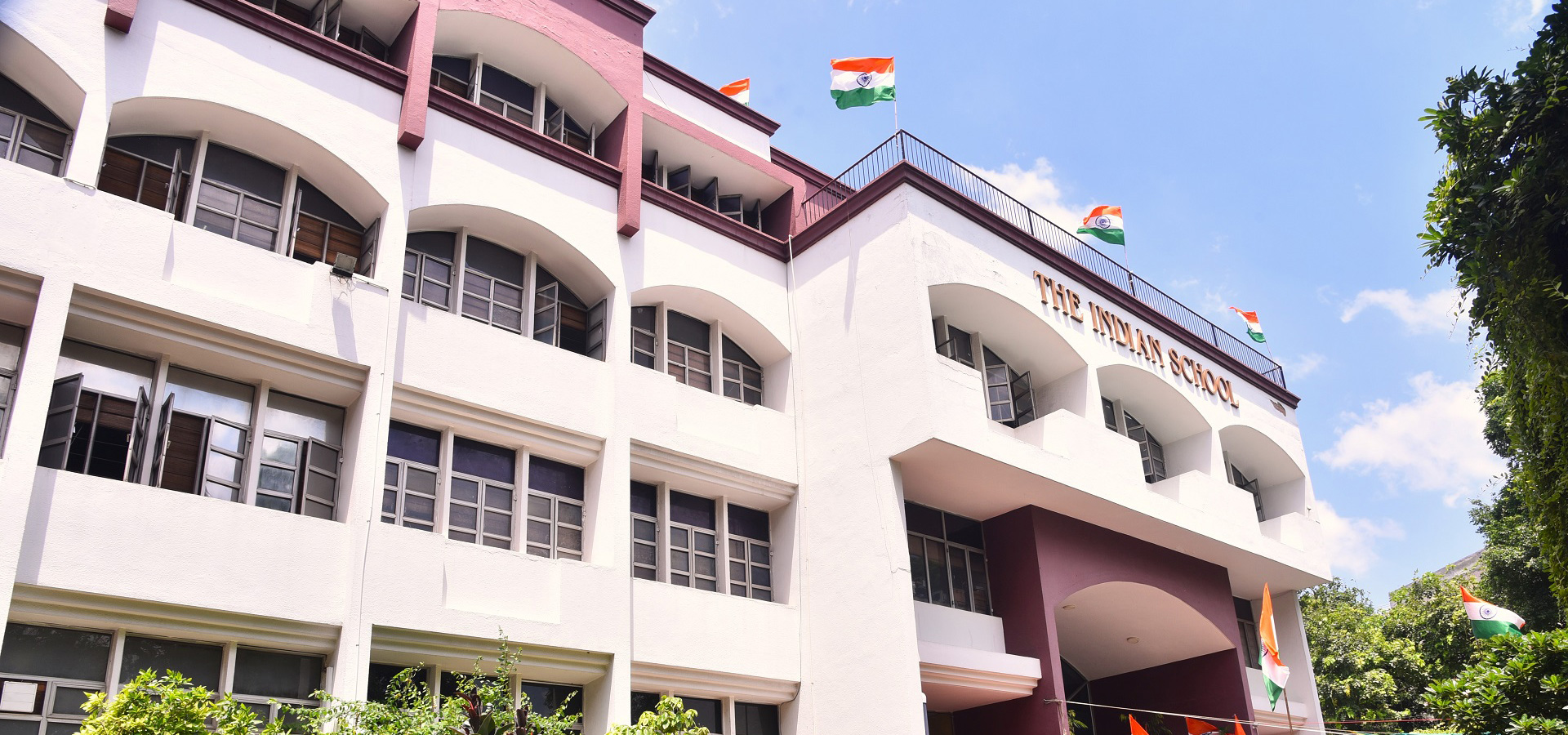
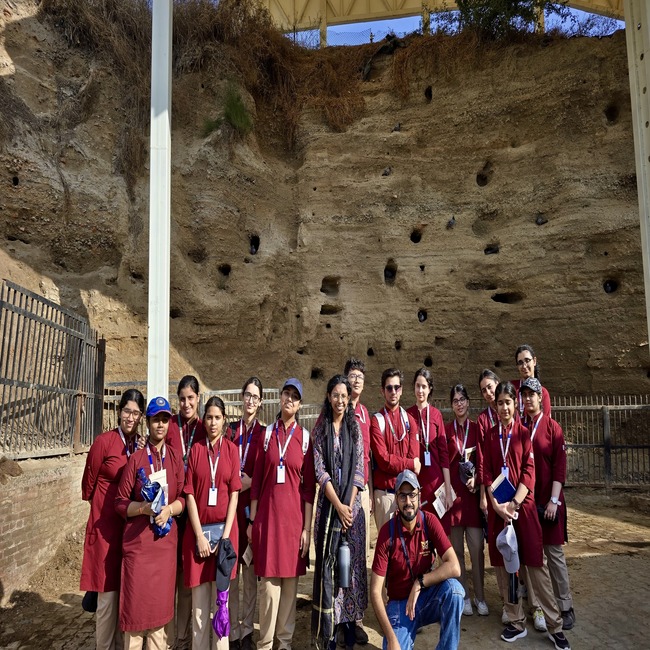
Students of The Indian School undertook an educational visit to Rakhigarhi on 7 April 2026. A group of 15 Class XII students participated in this one-day excursion to one of the largest sites of the Harappan civilisation.
The group departed from School in the morning and, upon arrival, had a taste of the traditional local cuisine, offering an introduction to the regional culture. The academic exploration began with a guided heritage walk led by Nakul Chhabra, founder of "History Beyond Books".
Students were first oriented with a contextual overview of the Harappan period, followed by a visit to the site museum, where they examined pottery, artefacts, and skeletal remains. At the excavation grounds, students were introduced to the scientific methods of archaeology. A grid system marked on the site was used to explain how archaeologists systematically divide land for excavation.
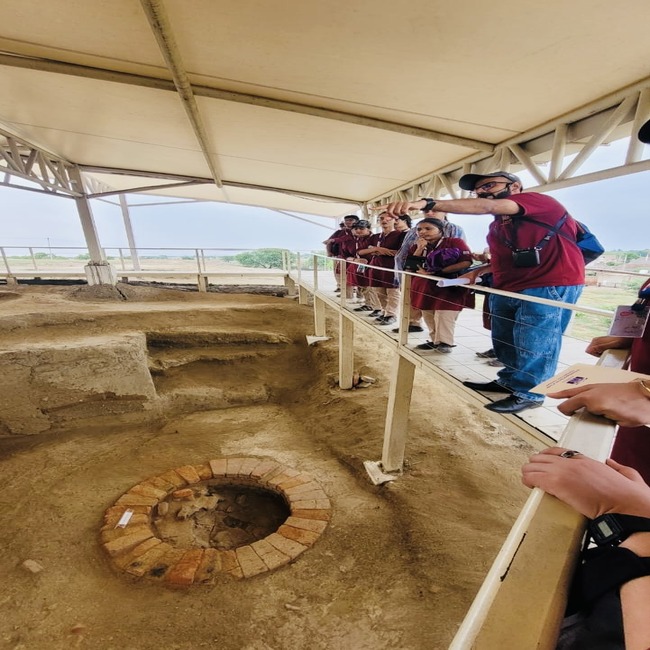
The discussion also extended to broader themes such as geographical shifts over time and their impact on ancient civilisations. Concepts like carbon dating were explained with relevant examples, making the session highly engaging and informative. The group then visited "Mound 3", a fully excavated area, where they observed structural remains, including burial pits, skeletal remains, burnt bricks, walls, and an advanced drainage system. Detailed explanations were provided about the size and composition of the bricks used, as well as their historical significance. A key highlight of the visit was the witnesslive of a live excavation being conducted by the Archaeological Survey of India. The students interacted directly with the archaeologists, who demonstrated excavation tools and techniques, and explained how artefacts are identified, documented, and interpreted.
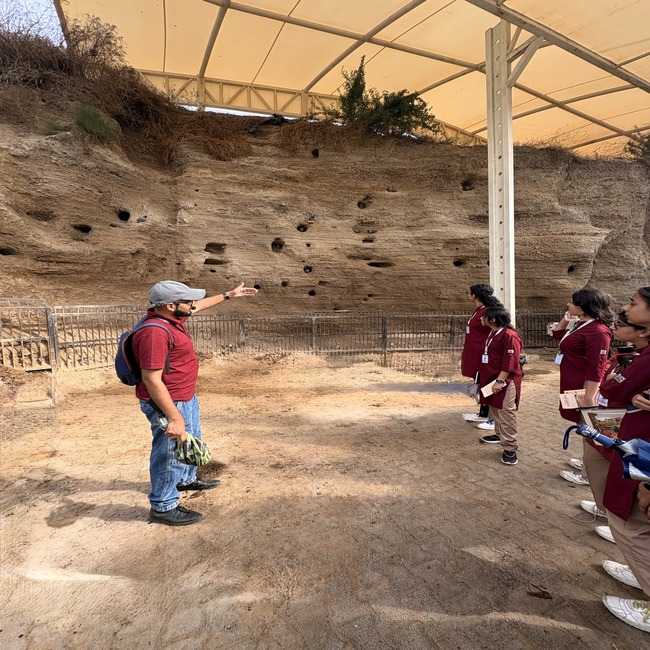
The final stop included "Mound 4", where natural formations known as "parrot holes" or "pigeon holes", created due to bird nesting, revealed multiple layers of soil. This provided a clear visual of long-term habitation at the site, spanning from early to later periods.
The visit was thoughtfully structured, interactive, and deeply enriching. It provided students with a rare opportunity to engage with history beyond textbooks, truly experiencing the past in a tangible and meaningful way.
 In the Press
 Admissions