Capacity Building Workshop
Understanding the POCSO Act (2012) for teachers and other staff- Creating Safe Schools is Everyone's Responsibility
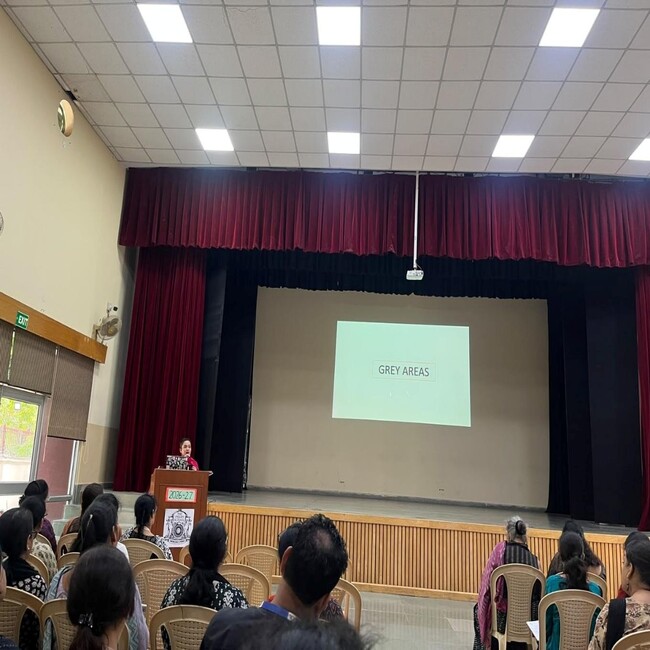
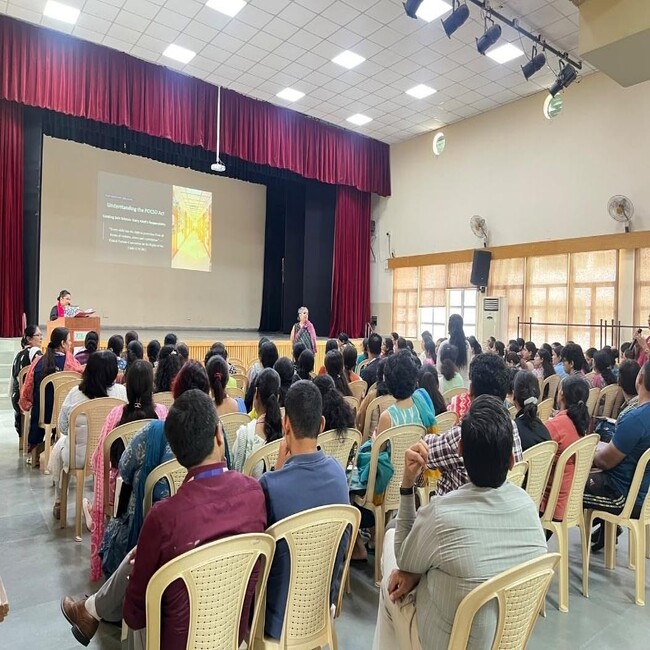
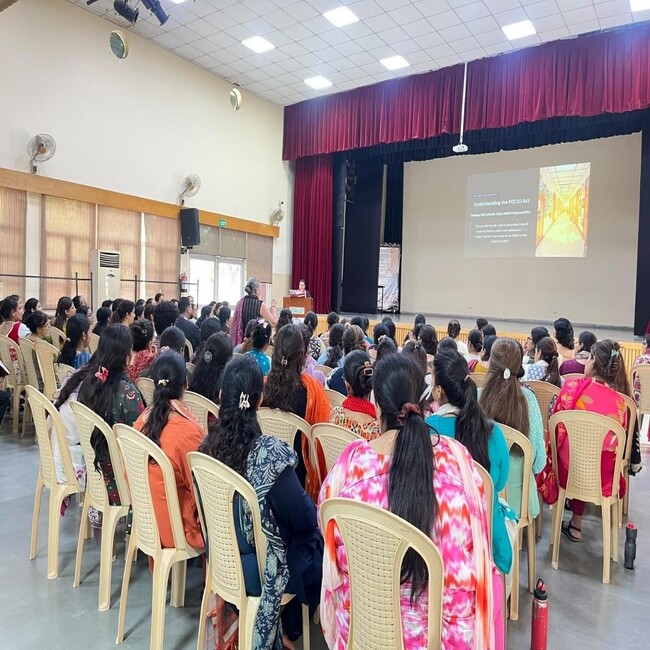
On 10th July'26 School Counsellor, Ms Meghna Joshi, conducted a staff sensitisation workshop titled Understanding the POCSO Act (2012) - Creating Safe Schools is Everyone's Responsibility. The workshop aimed to strengthen educators' understanding of child protection while fostering a collective commitment towards creating emotionally and physically safe learning environments for all children.
The session commenced with a reflective exercise, inviting teachers to consider the individuals with whom they themselves feel safest. This served as an entry point into understanding the significance of trust, emotional safety, and secure relationships in a child's life. Building upon this reflection, the discussion emphasised that children are most often harmed by individuals known to them, challenging common misconceptions that abuse is predominantly perpetrated by strangers.
The workshop introduced the Protection of Children from Sexual Offences (POCSO) Act, 2012, outlining its objectives, guiding principles, and child-centric approach to safeguarding. Participants were familiarized with the shortcomings of earlier legal provisions that addressed child sexual abuse under general criminal law and the need for a comprehensive legislation that specifically recognised children as a distinct and vulnerable group requiring legal protection.
The provisions of the POCSO Act were discussed in detail, with particular emphasis on its broad and inclusive definition of child sexual abuse. Teachers were sensitized to the fact that the Act extends far beyond penetrative sexual assault and encompasses non-penetrative sexual assault, sexual harassment, the use of children for pornographic purposes, online sexual exploitation, grooming, exposure to sexually explicit material, inappropriate touching, and other acts of sexual misconduct against children. The workshop reinforced that any behaviour violating a child's bodily autonomy, dignity, or sexual safety falls within the ambit of child protection concerns and warrants an appropriate response.
The session further explored the complex nature of child disclosures, highlighting that children rarely disclose abuse directly or immediately. Participants examined the various ways in which children may communicate distress - verbally, behaviourally, emotionally, or through play and discussed the psychological, familial, and social factors that often contribute to delayed or absent disclosure. Common behavioural and emotional indicators of abuse were reviewed to enable educators to identify children who may require support.
The concluding segment focused on the responsibilities of school personnel upon receiving a disclosure or suspecting abuse. Teachers were guided to remain calm, listen without judgment, reassure the child that they had done the right thing by speaking up, refrain from questioning or conducting their own investigation, and report the concern immediately to the School Child Protection Committee in accordance with established protocols. The importance of objective documentation, maintaining confidentiality, preserving the child's dignity, and avoiding labelling or victim-blaming was emphasized throughout. The workshop also highlighted the mandatory reporting provisions under the POCSO Act, reiterating that failure to report a suspected offence is itself punishable under law.
The workshop concluded by reinforcing that safeguarding is a shared responsibility and that every member of the school community plays a vital role in creating an environment where children feel protected, heard, respected, and empowered to seek help.
 In the Press
 Admissions