Class 1 visits the ASI Childrens Museum
“Learning comes from environmental experiences, not just words.” Maria Montessori
176 students of class 1, accompanied by their teachers and support staff embarked on an educational excursion on 26 February 2026. At 9:30 a.m., the group set off for the ASI Children's Museum, located within the Siri Fort Complex, to gain a meaningful exposure to India’s rich history and cultural heritage.
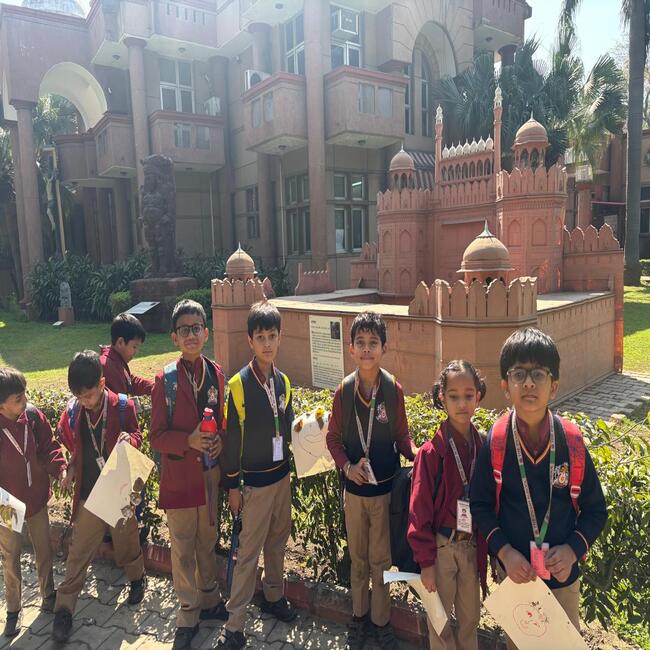
Functioning under the aegis of the Archaeological Survey of India, the museum is known for the authenticity of its artefacts. At the entrance, the pupils immediately recognised a model of the Red Fort. Inside the main hall, a prominent bust of the Father of the Nation, Mahatma Gandhi, drew their attention. The teachers engaged the children in discussion, sharing anecdotes and encouraging observations.
The students were intrigued by a city plan from a bygone era and quickly noticed the absence of motor vehicles and street lights! This led to a thoughtful comparison between cities of the past and the present, with the children remarking upon traffic congestion and pollution today. The paintings and artefacts on varied themes further enriched their understanding of India’s art and culture.
The museum’s lush gardens provided an open space to unwind and connect with nature. After lunch, the pupils listened to the birds, identified trees such as the Peepal, Banyan and Neem, and excitedly discovered an Indian Gooseberry tree, prompting a discussion on the health benefits of amla.
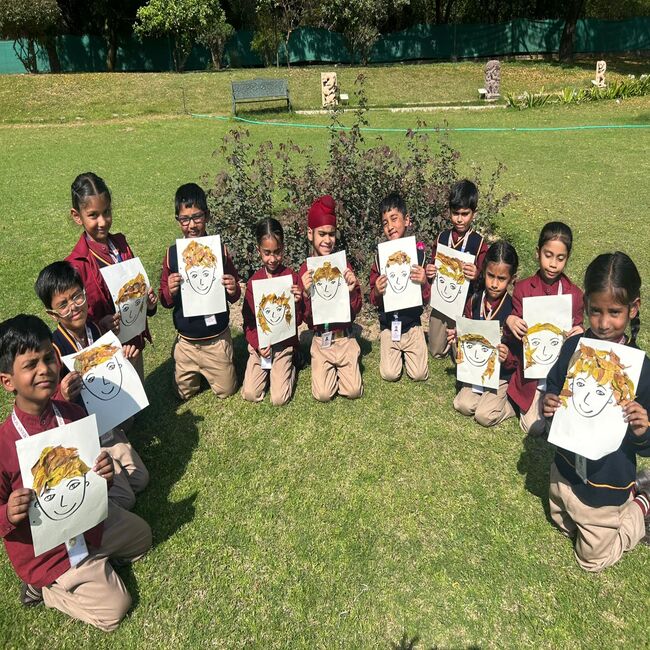
A creative activity followed, where the children designed faces using fallen leaves and twigs. Dry Peepal and Neem leaves were imaginatively used as hair, while twigs added artistic texture! The quality of work produced was commendable and worthy of exhibition.
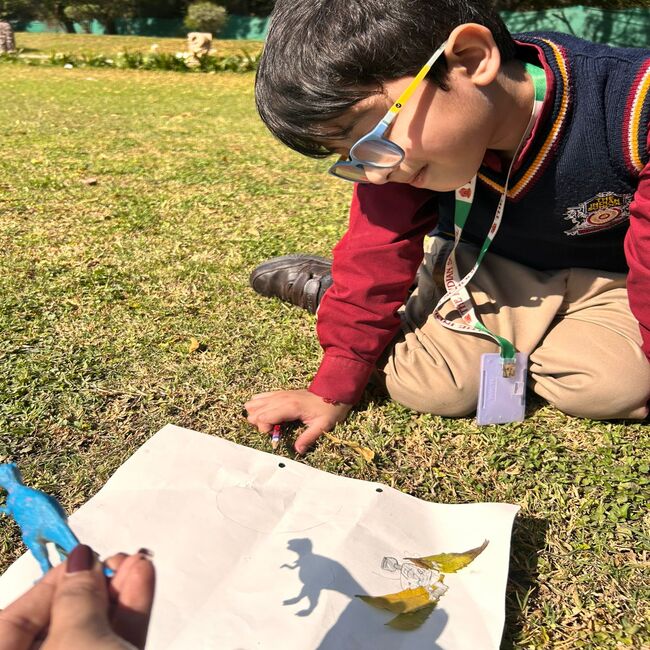
In an outdoor STEM activity on light and shadow, the pupils used the shadows of their favourite toys as stencils to sketch outlines, gaining conceptual insight into the interplay of light and shadow. Though simple, the activity offered meaningful experiential learning.
The day also reinforced civic responsibility, as the children responsibly disposed of wrappers and waste in designated bins. Enriching young minds beyond the classroom, the excursion successfully achieved its goals of experiential learning, art integration, multidisciplinary engagement and responsible citizenship, made possible through the support of the museum authorities.
 In the Press
 Admissions