The Indianite MUN 2025
The Indianite Model United Nations (MUN) Conference, held on 11 and 12 November 2025, was an engaging and intellectually stimulating two-day event that brought together young minds committed to dialogue, diplomacy, and global awareness. Centred around the theme “In Every Voice, Change Resides,” the conference provided a meaningful platform for students to participate in informed debate, develop critical thinking skills, and explore solutions to pressing global and national issues.
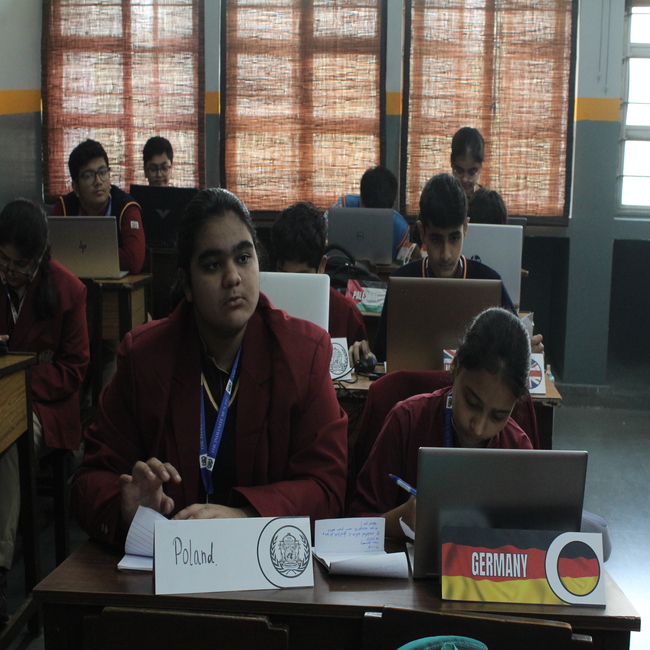
From the very beginning, the conference reflected the true spirit of the United Nations by fostering an environment of collaboration, respect, and constructive dialogue. Delegates demonstrated enthusiasm and dedication as they assumed the roles of global leaders, policy-makers, and journalists. Through their participation, they engaged with complex challenges, presenting well-researched perspectives and working towards consensus with maturity and insight. The event not only encouraged academic engagement but also promoted leadership, empathy, and an appreciation for diverse viewpoints.
The success of the conference was largely due to the efforts of the Secretariat, comprising our alumni, Deepanshi Moitra, Dhruvi J. Jain, Vansh Sharma, Rishima Dube, Shiksha Dwivedi, Rishietdeep Singh, and Samiya Khurana. Their careful planning, coordination, and leadership ensured that every aspect of the conference was conducted smoothly and efficiently. Managing multiple committees while maintaining structure and engagement, the Secretariat played a pivotal role in creating a professional and enriching experience for all participants.
The conference featured six committees, each representing different dimensions of governance and discourse: the United Nations General Assembly (UNGA), the United Nations Human Rights Council (UNHRC), the United Nations Security Council (UNSC), the Joint Parliamentary Session (JPS), the International Press Corps (IPC), and the Marvel Committee. Each committee offered delegates a distinct platform to analyse issues, present arguments, and collaborate on solutions. Under the guidance of experienced Executive Board members, the debates maintained a high standard, encouraging clarity of thought and effective communication.
The United Nations General Assembly engaged delegates in discussions on the impact of unilateral actions by major global powers on multilateralism and international peace. Participants examined how economic policies, particularly those of the United States, influence diplomatic relations and global cooperation. The debates highlighted the importance of balancing national interests with collective responsibility, with many delegates advocating for stronger multilateral frameworks.
In the United Nations Human Rights Council, delegates addressed the growing concern of AI-generated deepfakes and synthetic media. The committee explored the ethical, legal, and technological implications of such advancements, emphasising the need for safeguards to prevent misuse. Discussions focused on protecting individuals from misinformation, identity manipulation, and digital exploitation in an increasingly interconnected world.
The United Nations Security Council operated in a double-delegation format, adding depth to the proceedings. Delegates deliberated on strengthening global counter-terrorism measures through the implementation of the International Convention for the Suppression of the Financing of Terrorism (1999). The discussions underscored the importance of financial monitoring, intelligence-sharing, and international cooperation in addressing evolving security challenges.
The Joint Parliamentary Session focused on national issues, particularly citizenship and immigration in India. Delegates examined the future of the Citizenship Amendment Act (CAA), the National Register of Citizens (NRC), and the broader implications of internal migration. The discussions reflected a strong understanding of constitutional principles and socio-political realities, encouraging balanced and thoughtful deliberation.
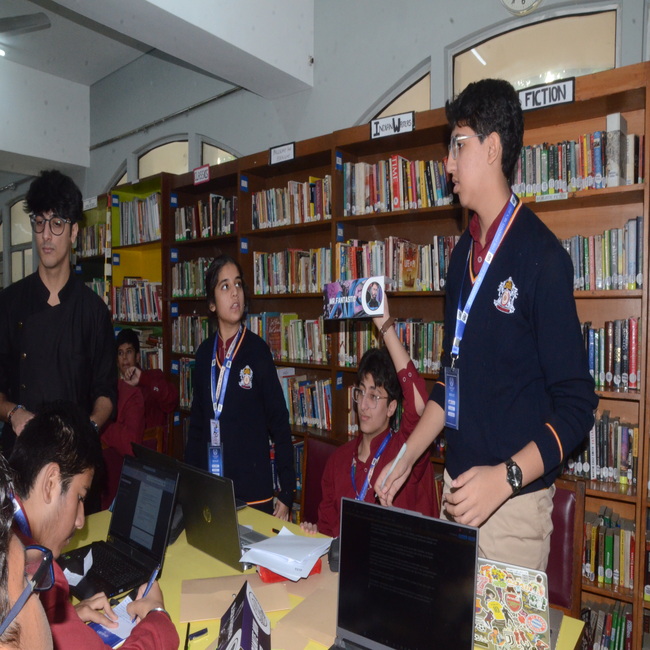
The International Press Corps contributed significantly by documenting the conference through articles, interviews, photographs, and caricatures. Their work captured both the intensity of debates and the collaborative spirit of the event, providing a comprehensive narrative of the proceedings.
Adding a creative dimension, the Marvel Committee allowed delegates to explore governance through a fictional lens. By debating the regulation of superheroes, participants examined themes of accountability, autonomy, and ethical responsibility. This innovative approach encouraged imaginative thinking while maintaining a structured and analytical framework.
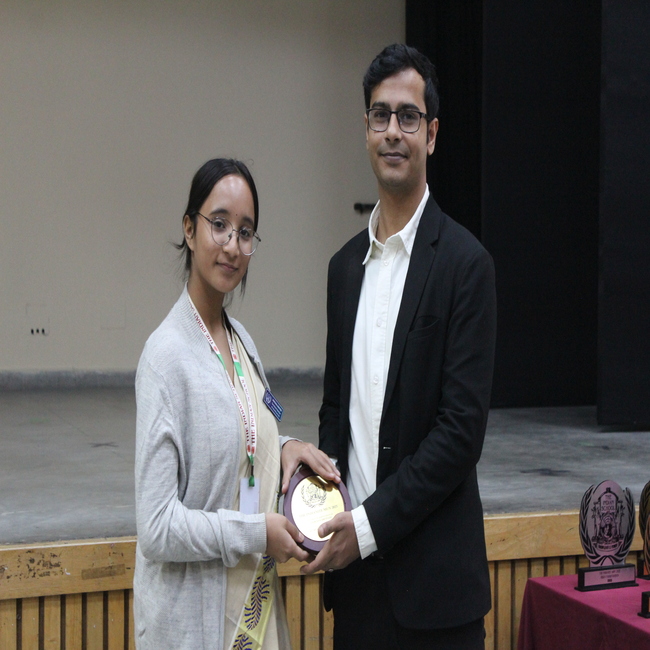
The conference concluded with an awards ceremony recognising outstanding performances across all committees. Delegates were honoured for their research, public speaking, diplomacy, and engagement. In the United Nations General Assembly, Kashika (Greece) received the Best Delegate award, while Aarna Sawarn (Brazil) was awarded High Commendation. In the United Nations Human Rights Council, Mohd. Omar (China) was recognised as Best Delegate, with Samarth (USA) receiving High Commendation. The United Nations Security Council awarded Best Delegate to Kanishk Alhawat and Bhoomika Lohia (France) for their collaborative and strategic approach. In the Joint Parliamentary Session, Arav (Amit Shah) was declared Best Delegate, followed by Pragun (Rahul Gandhi) with High Commendation.
The International Press Corps recognised excellence in photography, journalism, and caricature, celebrating students who effectively captured the essence of the conference through creative expression. The Marvel Committee also acknowledged exceptional participation, with Aryan Sehgal (Spider-Man) receiving the Best Delegate award.
Beyond awards and recognition, the Indianite MUN 2025 proved to be a transformative learning experience. It enabled students to develop essential skills such as public speaking, negotiation, research, and teamwork. Delegates learned to approach issues from multiple perspectives, engage in respectful dialogue, and think critically under pressure. The experience fostered confidence, adaptability, and a deeper understanding of both global and national concerns.
The conference also played a significant role in bridging the gap between theoretical knowledge and practical application. By simulating real-world institutions and challenges, it provided students with an opportunity to engage actively with complex issues, preparing them for future academic and professional pursuits.
As the event concluded, it left a lasting impression on all participants. It reinforced the idea that when young individuals are given a platform to express themselves and engage thoughtfully, they can contribute meaningfully to change.
 In the Press
 Admissions