Class 7 visits Gandhi Smriti
On 13 May 2026, a group of 95 students of Class VII undertook an evocative educational excursion to Gandhi Smriti, the hallowed site where Mahatma Gandhi spent the final 144 days of his life. This visit was meticulously designed to provide the students with a tangible connection to the history of the Indian independence struggle and the personal journey of the Father of the Nation.
The academic exploration commenced with a comprehensive orientation on the historical significance of Birla House. The students were first introduced to a contextual overview of the 1940s, a period marked by both the triumph of independence and the tragedy of partition.
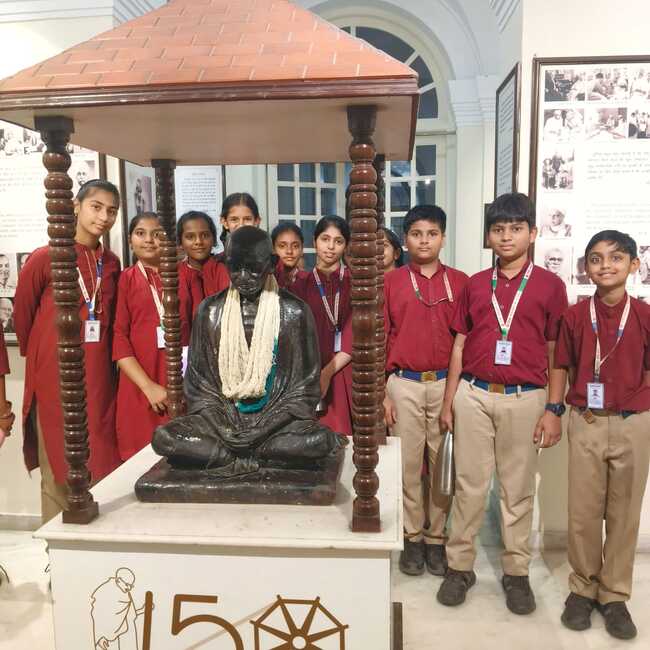
The group then proceeded to the museum, where they examined a vast collection of photographs, personal artefacts, and documents. The display of Gandhiji’s sparse belongings, including his spectacles, walking stick, and his iconic Charkha, served as a visual masterclass in the philosophy of "Simple Living and High Thinking", sparking a discussion on self-reliance and the economic significance of Khadi.
A major highlight of the visit was the walk along "Martyr’s Steps", the path that Gandhiji took on the evening of 30 January 1948. Educators at the site explained the gravity of the events leading to his assassination, allowing the students to reflect on the immense sacrifice made for the country.
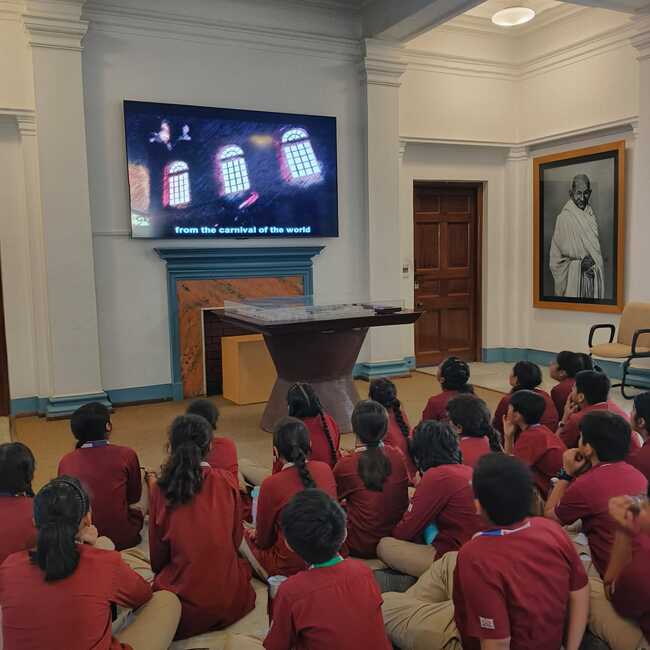
The discussion extended to broader themes of Unity in Diversity and communal harmony, emphasising how the principles of "Satyagraha" and "Ahimsa" remain the bedrock of Indian democracy. The students also spent considerable time at the "Eternal Gandhi" multimedia exhibit.
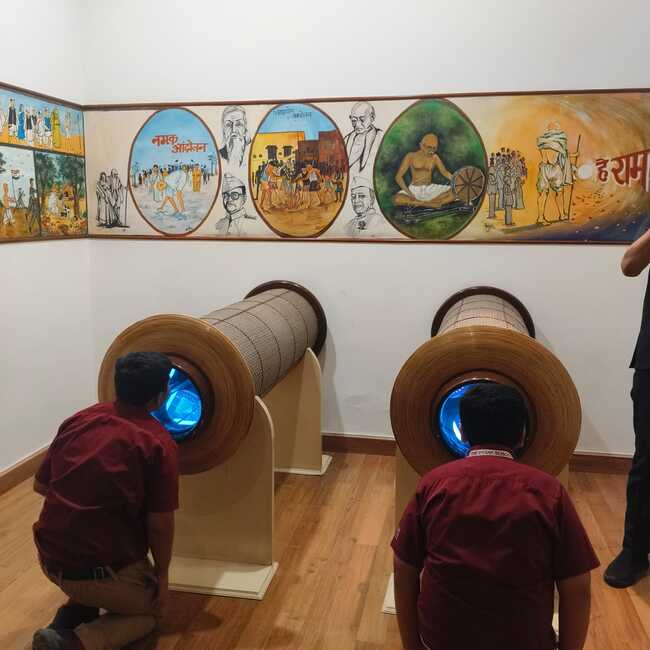
The interactive session bridged the gap between history and technology, as digital displays and animated narratives brought to life pivotal moments such as the Dandi March and the Quit India Movement. The participants interacted with the curators to understand how historical events are documented and preserved for future generations, making the session highly engaging and informative.
The final stop of the tour included the prayer ground and the "Martyr’s Column", where the students observed a moment of silence. The visit proved to be a thoughtfully structured and deeply enriching experience, providing the young learners with a rare opportunity to engage with history beyond the confines of their textbooks.
 In the Press
 Admissions