Middle School engages with the theme of Migration and its various aspects
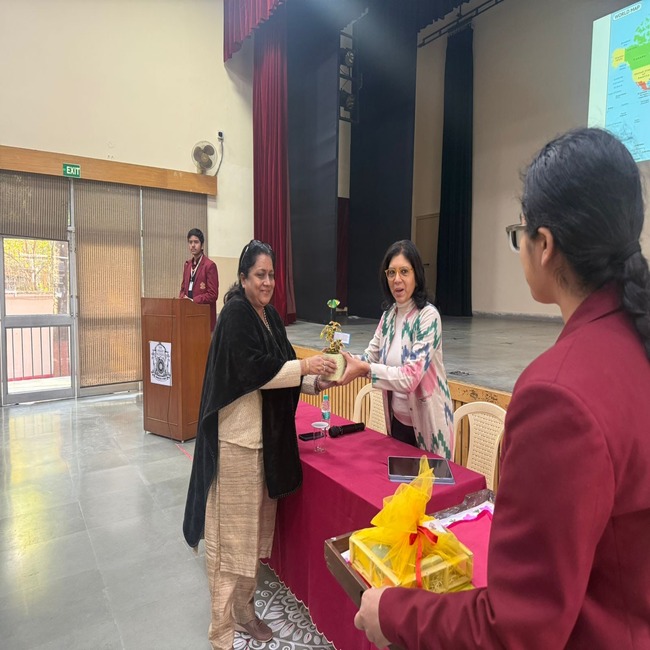
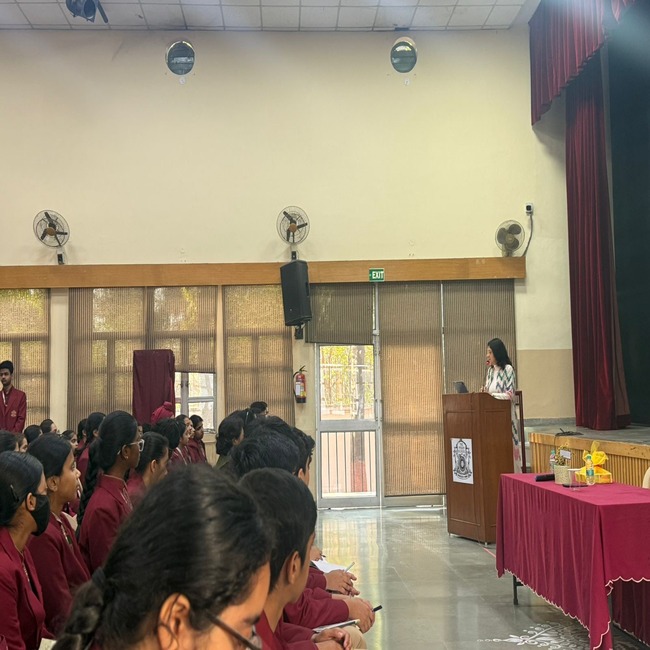
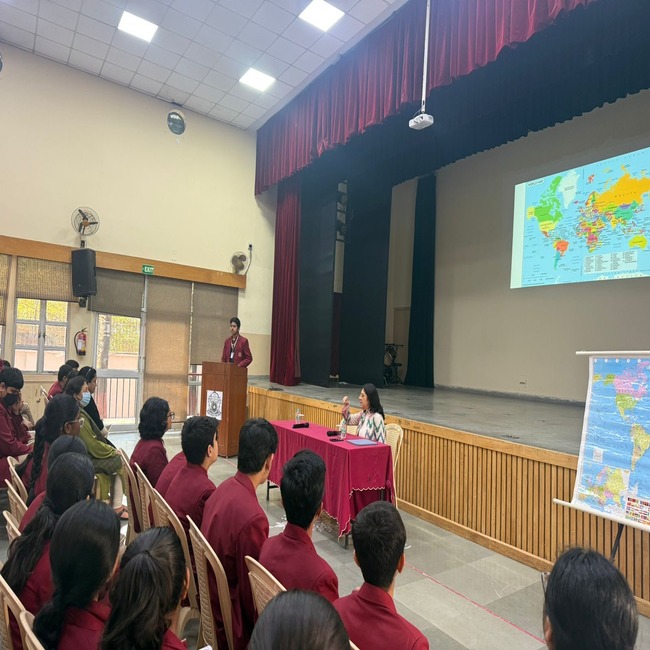
In an increasingly interconnected world, the movement of people across regions and borders has become one of the defining realities of our time. Whether driven by opportunity, conflict, climate or cultural ties, migration shapes societies in ways that are deeply visible today. On 6 December 2025, an interactive session on Migration was organised for classes 7, 8 and 9. Against this backdrop, we had the privilege of an interactive session led by Ms Madhavi Goradia Divan, School Governing Board Member, Senior Advocate in the Supreme Court of India and former Additional Solicitor General of India.
Ms Divan began by guiding the students through the many dimensions of migration. She noted that movement across regions can bring immense benefits, as seen in the example of the Parsis and the Iranians who settled in Bombay and contributed significantly to its growth. At the same time, she highlighted the complexities that arise in cases of distress or forced migration, such as the movement of people from Bangladesh into India, where issues of resources, administration and social tensions often emerge. The long-standing Israel Palestine conflict was discussed to show how questions of displacement and identity continue to shape global politics. The Partition of India served as another lens through which students understood the lasting emotional, political and social consequences of mass movement.
To connect these themes to contemporary public life, Ms Divan referred to Zohran Kwame Mamdani, the current Mayor of New York City, whose family history spans multiple migrations from India to East Africa and later to the United States. His story illustrated how movement across borders creates layered identities and influences political engagement, helping students see why discussions around citizenship and belonging often become complex.
The session also touched upon migration in the natural world, with references to how animals and birds travel across continents for survival and adaptation. This offered a broader perspective, showing that migration is both a human and ecological phenomenon shaped by necessity and change.
Before concluding, Ms Divan spoke about literature that captures the emotional tone of migration, such as stories of longing, memory, resilience and the search for home. This opened up a cultural dimension that complemented the political and social discussions.
Overall, the session encouraged students to understand migration as a powerful force shaping communities, identities and political landscapes. It was an insightful and thought-provoking exploration of one of the most relevant issues of our time.
 In the Press
 Admissions